Lāʻieikawai and Love in the Age of Shark-Men
“Take then, this little book, and show by how you receive it, by reading and indeed treasuring and caring for it, show your strong desire for the knowledge of Hawaiʻi and your everlasting readiness to uphold it, so that it may stand forever.” S.N. Haleʻole
I believe in the power of metaphors.
A metaphor connects the world as it is to the world that can be. It relies on truth and the power of our imaginations for its strength; in turn, it empowers us with the knowledge that we are capable of changing the world.
We live in an age of school shootings, heartbreaking revelations of sex abuse against students, and the frightening possibility of nuclear annihilation at the hands of irresponsible world leaders.
We live in a time of shark-men.
In addition to meaningful action, I would like to offer a metaphor. It involves a former student’s mural, and Malaekahana’s hands.
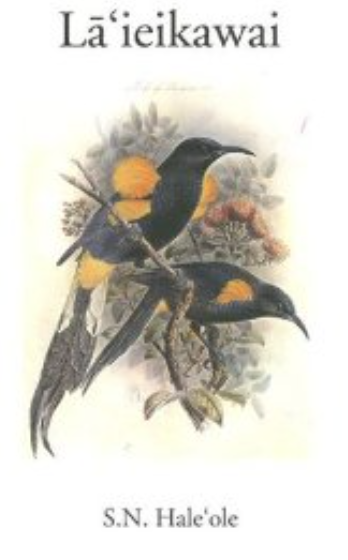
When I was a sophomore teacher, I would ask my students to read Haleʻole’s Lāʻieikawai and create a Synthesis Project that expressed a profound insight or takeaway from the moʻolelo. It was always an exciting time full of possibilities and deep contemplation, a time of striving for excellence.
Nana’s vision was to create a mural:
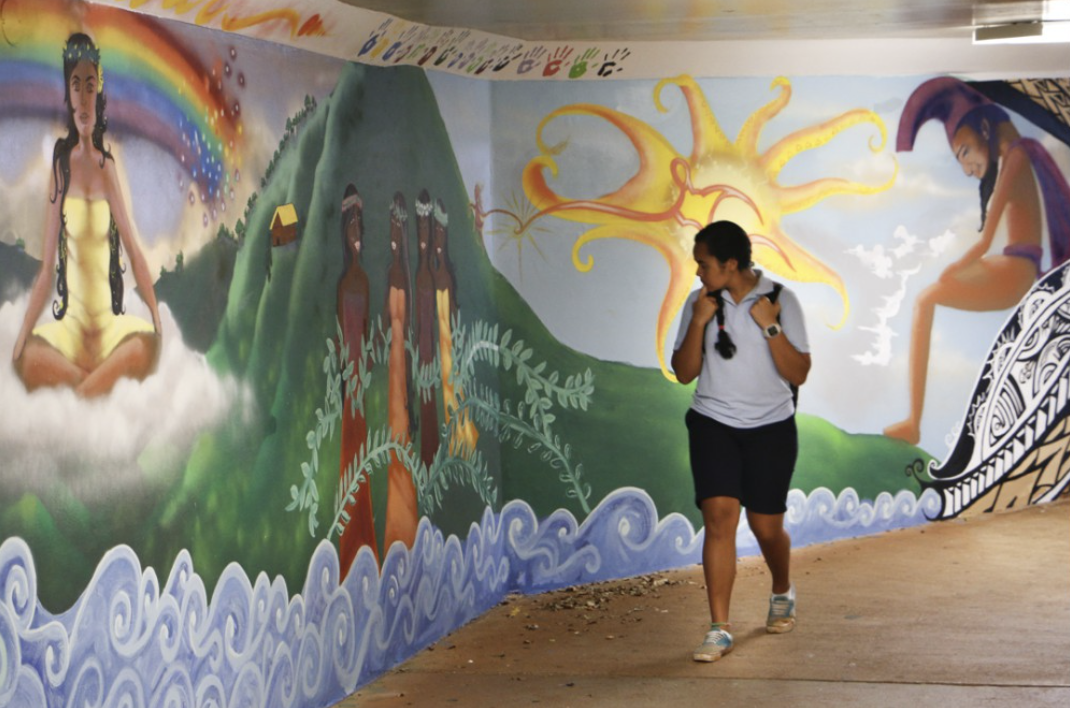
When I look at Nana’s mural, I see a metaphor for who we are, and who we aspire to be. It retells the moʻolelo of Lāʻieikawai; but within the drama of its characters and vibrant colors, I also see the contours of Nana’s heart and imagination.
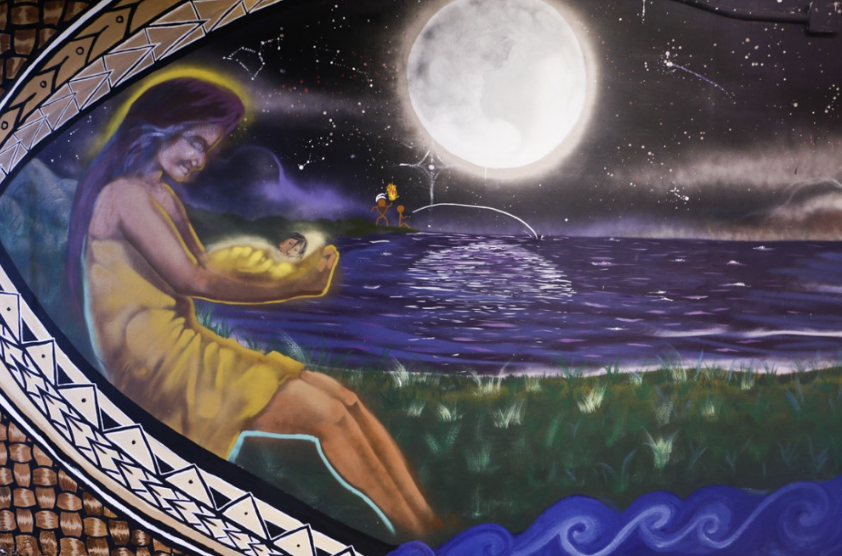
In these difficult times, I’m drawn to Malaekahana’s hands. Nested within them are Lāʻieikawai and Lāʻielohelohe, her twin daughters, the moment before she must send them out into the difficult currents of life. In Maleakahana’s hands, I see Nana and many of our students, who enter our classrooms buoyed by the love of a mother, a father, a grandparent, a teacher, a Princess.
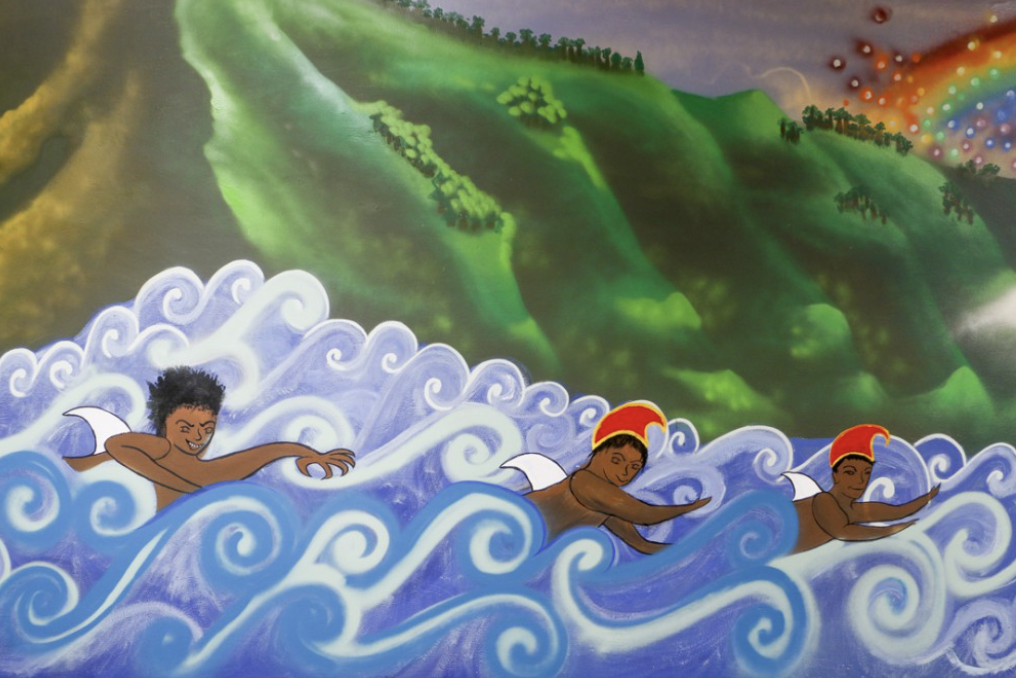
In the turbulent waters are three shark-men, looming: ʻAiwohikupua, Hauaʻiliki, and Halaaniani. They are the shark-like forms that sometimes inhabit our students’ lives: the life-changing loss of a loved one, the debilitating effects of depression, the daily grind of being a high school student. Now, in this age of mass shootings and sexual abuse, these shark-men are less metaphors than malignant reality.
My heart breaks when I think of the 17 students and teachers murdered at Marjory Stoneman Douglas High School, just as it broke when I watched in my classroom the first news reports of the 20 first graders and 6 teachers gunned down at Sandy Hook Elementary.
Sometimes they are sharks in shepherd’s clothing, like Waka or Kapukaihaoa, the very individuals who have been entrusted to guard our young people. My heart fills with anger when I think of the countless students traumatized by the sexual predator, Dr. Browne, and the failure of our school to protect them. Pua ka wiliwili nanahu ka manō.
And yet, through love, the mural transforms. Darkness turns to light. The Maile sisters remind us: “Trouble to one is trouble to all.” They entwine Lāʻieikawai in their maile forms with their love and unwavering support.
And there, along the ridgeline, is Kahalaomapuana, steadfast, firm. She is the youngest sister, but she is also Lāʻieikawai’s greatest protector. Her fierce aloha is as sharp as hala leaves against those who would harm her sister. Our campus, our world, is filled with beautiful, powerful Kahalomapuanas: men and women, teachers and students, bound together by our sacred duty to love and care for each other.
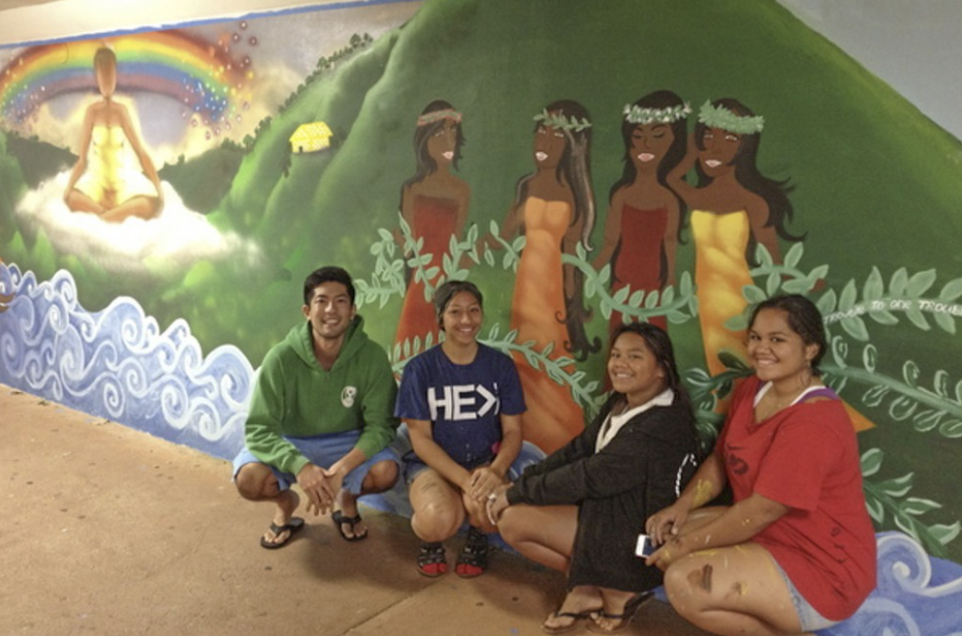
I gain strength thinking of Kahalaomapuana, humbled by the bravery of teachers like Aaron Feis and Scott Beigel, who sacrificed their lives to save the lives of their students. Like many other teachers and students at my school, and in the countless schools from here to Parkland, Florida, I refuse to accept our current reality as unchangeable. I commit myself to doing everything within my power to stand firm against those who would do harm to our students (whether through action or, in the case of school shootings, inaction).
I gain strength from Malaekahana’s hands: the mother who, in profound courage, saves her twin daughters from her violent husband, no matter the consequences to herself. It is the first act of love in the moʻolelo that ripples outwards and transforms the lives of all other characters in the story.
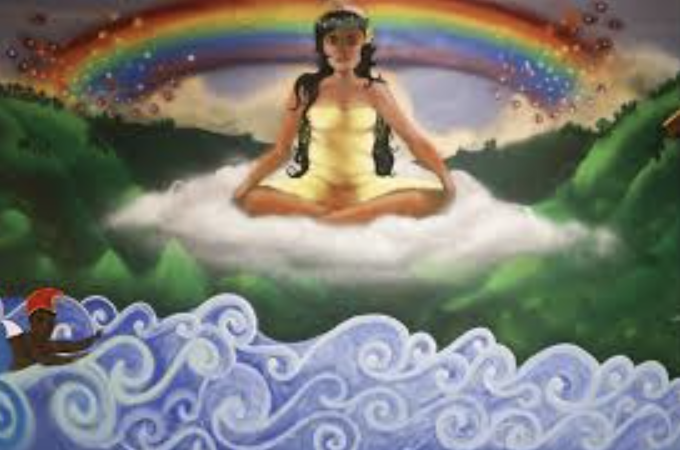
At the end of the moʻolelo, Lāʻieikawai ascends to akua status. She sits at the heart of the mural, a beautiful rainbow arching above her, a physical manifestation of her mana and beauty. It is from the rain that the rainbow is born; it is from the challenges of our lives, that our character is forged. Her transformation reminds us that our love for others is what makes us godly.
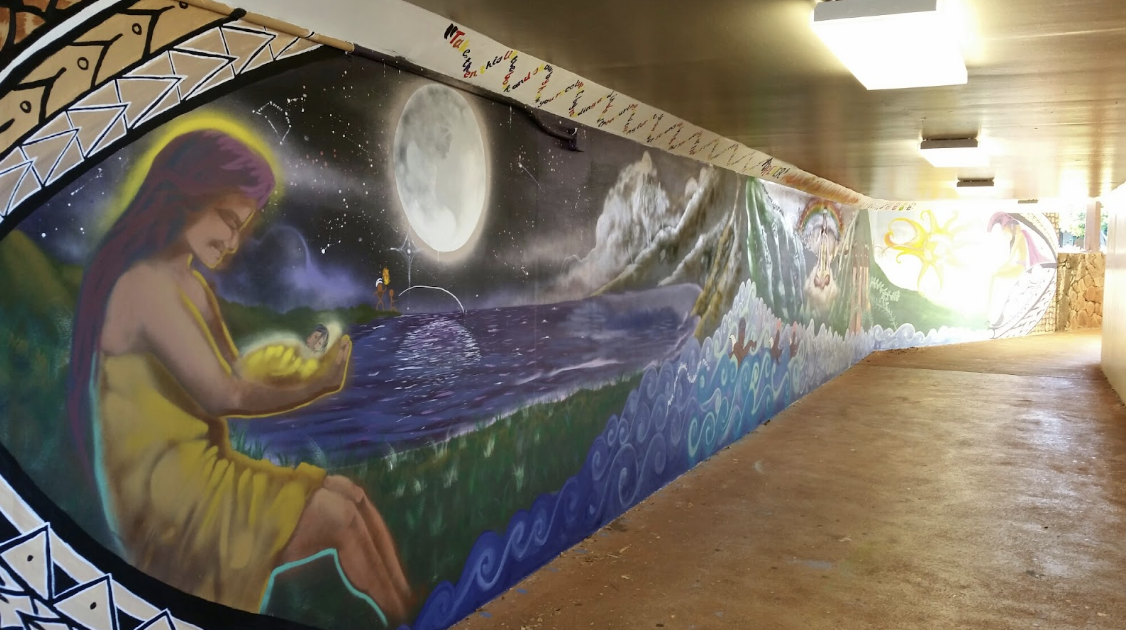
It is my hope that these lessons from Nana’s mural, and other life-giving metaphors, will guide us through these difficulties and dark times towards a brighter, stronger future; that they will arch over our lives like Lāʻieikawai’s iridescent rainbow, and embrace us like Malaekahana’s hands, a reminder of our deep responsibility to protect our young people within the sacred spaces of our schools.