We, The Star Keepers
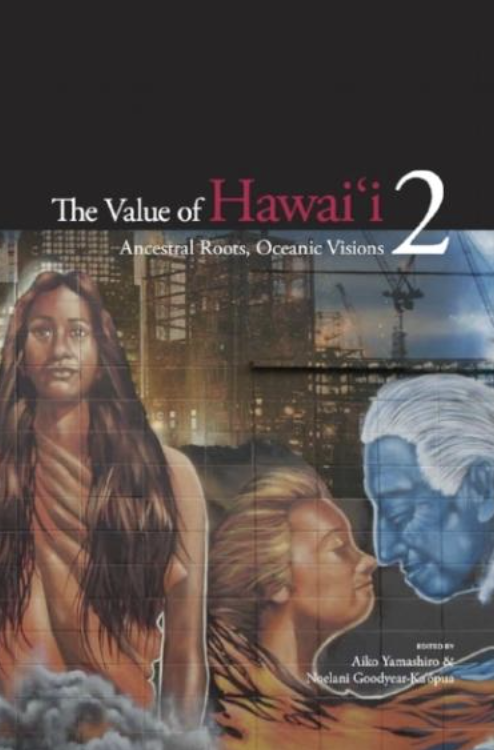
(originally published in The Value of Hawaiʻi 2)
For the past two years, I have found myself in a perfect storm of weddings. At the age of thirty, the biological clocks of my high school friends seem to have aligned with the certainty of a tidal chart. Upon this nuptial tempest, I have been cast to the shores of Boston and San Francisco, Richmond and the North Shore of O‘ahu, and nearly every hotel in Waikīkī.
These weddings are a time of reconnecting. Stories from our high school days at Punahou are dusted off and trotted out with great relish. And they are also a time of looking towards the future: blossoming new families, promising new careers. Because I am one of the few of us still living in Hawaiʻi, my friends frequently ask me questions about home. And because I work at Kamehameha Schools, sometimes these conversations turn to Hawaiian-related issues (as if my employer has vested me with expertise in Hawaiian-related things). A month ago, I found myself walking down a bustling Vancouver street with my soon-to-be-married friend when the topic of Hawaiian sovereignty came up. My heart sank when I saw in his eyes that sovereignty was not even a possibility in his imagination.
My heart sank because my friends, in most situations, are very intelligent individuals, successful students in high school and college. Many are now entering respectable professions as doctors and lawyers, engineers and businessmen; some will return to Hawaiʻi and become future leaders in our communities. And yet, when it comes to the issues closest to home, to issues like sovereignty or GMOs, or food sustainability, or rail, or the building of a new telescope on Mauna Kea, I’ve noticed a certain lack of foundational knowledge, the prerequisite of healthy debate. I worry when I hear my friends rely on reductive and sometimes inaccurate narratives of Hawaiʻi’s history, narratives that have been promoted by our tourism industry and tacitly supported by our educational system. 1
As a high school teacher at Kamehameha Schools, these conversations caused me to reflect on my role as a teacher in providing that foundation. What responsibilities do we have in preparing the next generation of servant leaders, many of whom will be nurtured in our private schools? What foundations of knowledge do our students need to face the challenges of Hawaiʻi’s future?
My Journey
I thought back to my own education at Punahou: the many wonderful teachers I had, the wealth of resources and opportunities available to my friends and me. It was an incredible privilege to attend Punahou, and I was reminded of that fact by my father who, in response to a generous financial aid package, dragged me one Saturday morning down to Middle Field with a pick and bucket to pull weeds. “This is a small way for us to pay back the school,” he said (oddly, I was equally proud of my father as I was embarrassed of being seen by my classmates).
And yet, for all the opportunities and doors that were opened for me at Punahou, I don’t remember taking a single Hawaiian history class in my four years of high school. In English, I had the opportunity to read Hamlet and The Great Gatsby and dozens of other novels and poems and plays, but not a single Hawaiian moʻolelo. In my senior year in 2000, the Hawaiian language program was just starting as an elective class. None of my friends took Hawaiian; it didn’t count towards graduation requirements. For all the valuable things I learned at Punahou, from Japanese to calculus to European history, I left knowing little about the contemporary issues facing Hawaiʻi, and the dynamic history that has shaped our present. 2
It was only in college at the University of Southern California—through a postcolonial literature class that exposed me to Irish and Caribbean writers like W.B. Yeats, Derek Walcott, and Kamau Brathwaite’s rhythm of the hurricane—that I arrived at Doheny Library, searching for Cathy Song, and Haunani-Kay Trask’s Light in the Crevice Never Seen. I also found Bamboo Ridge on those shelves. What a revelation it was to read Darrell Lum’s “Beer Can Hat” for the first time!
This led me back to Hawaiʻi to pursue a Masters degree in English at UH Mānoa. There, I was exposed to a rich and ever-expanding body of literature written by Hawaiian and local writers, grounded in the complex and contested history of this place. Not only were these inspiring writers writing in the familiar voices of Hawaiʻi’s people, but using literature to engage in the difficult problems facing our community. Although many of these stories came from a generation prior, they spoke to problems that I recognized. I began to see the web of connections between yesterday and today, between the health of the land and the health of the people, between stories and our storied lives. When I read Eric Chock’s poem, “Poem for George Helm, Aloha Week 1980,” I was introduced to George Helm and the concept of Aloha ʻĀina. When I heard George Helm sing “Kuʻu Pua i Paoakalani,” my heart trembled with love and anger. His story took me to Queen Liliʻuokalani’s Hawaiʻi’s Story by Hawaiʻi’s Queen: a Queen who had once been for me simply the composer of beautiful melodies at the time of the overthrow became a light of wisdom, courage, and forgiveness (I cannot listen to the “Queen’s Prayer” without tearing up). I began to feel the tension within our state motto, “Ua Mau ke Ea o ka ʻĀina i ka Pono,” to trace the scars of Hawaiʻi’s colonial history, to see the connections between the 1970s struggles in Waiāhole-Waikāne and the struggle against GMOs today. I began to notice how agro-chemical multinationals like Monsanto and Syngenta were modern-day mutations of global capitalism, the reincarnations of the sugar plantations that brought my great-grandfathers to ʻOlaʻa and Puʻunēnē.
Through this foundation of knowledge, the connections between literature and my own life became more real and direct. When I read Alani Apio’s Kāmau, I was working as a bus boy at the Princess Kaʻiulani hotel. I began to notice unsettling juxtapositions—newspaper headlines disparaging rising homelessness besides announcements of new luxury condominiums—and understand the struggle to protect the iwi kupuna from golf courses and telescopes and rail developments. These observations sparked a curiosity that moved from literature to history: I desired to know how these issues of land tenure flowed from the Māhele and the Democratic Revolution of 1954, and turned to books like Gavan Daws and George Cooper’s Land and Power in Hawaiʻi and Lilikalā Kameʻeleihiwa’s Native Land and Foreign Desires for greater perspective. Above all, in these stories I found inspiring tales of solidarity and compassion, overflowing with the dignity of Hawaiʻi’s people—my neighbors, my friends, my heroes, who came together time and again to confront Malo’s big fish from the dark ocean. 3
Their victories and defeats inspired me to write my own poems, to add my own voice to this unfolding story.
Making Space for Moʻolelo
When I graduated from UH and began teaching in the English Department at Kamehameha Schools, I was exposed to more and more traditional moʻolelo, stories that stretched back countless generations before the stories I had read in college. Even with my newly-minted graduate degree, I felt I had jumped into the deep end of the pool. On top of being a new teacher, here was a whole new literary tradition in which I had no expertise. Initially, I dipped my toes tentatively into the waters of this new literature, but stuck to the more familiar terrain of contemporary Hawaiian and local texts.
My greatest fear in approaching these moʻolelo was not doing them justice. These fears, I imagine, were shared by others in my department. Fortunately, our chair, Kaʻimi Kaiwi, gave us the freedom to move at our own pace: in my first year, she gently nudged us forward with the goal of incorporating at least one piece of Hawaiian literature into our curriculum by the end of the school year. We were encouraged to learn as we went along, to take risks, to make mistakes, and to grow in our understanding of these texts. 4
Through the commitment and leadership of teachers like Kaʻimi, Richard Hamasaki, and many others, our English Department has collectively arrived at a place where moʻolelo have assumed their rightful place alongside Homer and Shakespeare in our curriculum. This comparative approach has provided a rich intellectual vista for our students, where they can ground themselves in the stories of Hawaiʻi while reaching out to the wisdom of other literary traditions. In addition to the traditional Western and World canons, it is possible for a student who has passed through our high school to have read major texts such as The True Story of Kaluaioko‘olau, The Wind Gourd of Laʻamaomao, Lāʻieikawai, A Legendary Tradition of Kamapuaʻa, as well as excerpts from longer works like The Epic of Hiʻiakaikapoliopele, Kamehameha and his Warrior, Kekūhaupiʻo, and Ruling Chiefs of Hawaiʻi, amongst others. These works are supplemented by a vibrant body of contemporary Hawaiian and local literature: poetry mele, short stories, novels, and plays. This rich body of literature, which poet, critic, and colleague, Richard Hamasaki once described as vast “mountains in the sea” is the inheritance of our Hawaiian students, who increasingly stand upon its broad shoulders with pride and confidence. 5 And with the exciting translation work that is being done with the Hawaiian-language newspapers, more and more moʻolelo are published every year. 6
Few would argue against the benefits of teaching moʻolelo at Kamehameha Schools. But what value do these moʻolelo possess for our private school students at Punahou or ʻIolani, Damien or St. Louis, who do not share a common Hawaiian ancestry? How might these stories benefit the diverse student populations that make up our public school system?
I believe that the insights and values embedded in traditional moʻolelo are not only valuable to the Hawaiian community, but for all of us who value Hawaiʻi. They provide us with a different model of being in these islands, a deeper understanding of this place that strengthens our capacity for ʻaloha ʻāina. It is no accident that many of these moʻolelo deal directly with issues of governance. They provide enduring insights to values and practices of sustainability and pono governance that allowed a people to thrive and flourish in Hawaiʻi for 80+ generations. Most of all, I believe that moʻolelo, nurtured and evolved in this place, can help us to expand our imaginations about what is possible, to begin to “decolonize our minds,” as Ngũgĩ wa Thiong’o so elegantly put it. 7 They provide a paradigm that reaches beyond the narrow logic of global capitalism, beyond the folly of applying continental models of endless growth to our island ecosystem. 8 They are vital to the health of Hawaiʻi. Placed alongside the traditional Western and World canons, moʻolelo provide a balanced diet for our students. Why import 85% of our moʻolelo, when such fertile abundance grows here in this storied place?
Future Visions
One of the greatest joys of my job as an English teacher is to read my students’ stories. Through them, I can see the nascent fruits of a curriculum grounded in moʻolelo. Their modern-day moʻolelo offer me a glimpse into our collective future. More and more, I am finding stories like Mailani’s. The daughter of an astronomer, Mailani Neal was a gifted sophomore from Kona who I had the privilege of teaching in 2012. Her story, “Eyes of the Night Lights,” which is reprinted following this essay, was the product of a short story assignment given after reading Emma Nakuina’s version of “Kahalaopuna” and Gabriel Garcia Marquez’s short story, “A Very Old Man with Enormous Wings.”
Mailani’s story not only conveys her passion for astronomy, but also demonstrates a deep sense of kuleana that comes with being a “keeper of the stars.” This developed sense of kuleana is what I find truly amazing about Mailani’s story: nowhere in my directions did I ask students to consider the responsibilities that accompany their dreams. And yet this came naturally for her. It is fundamental to the DNA of her story. Her protagonist, Nāmakaonālamaokapō, whose name poetically connects her to the eyes of the Mauna Kea telescopes, looks to the source, seeking the wisdom of her grandfather, Kiaʻi. Through him, she accesses the wisdom of countless generations; for a year, she disciplines her mind, body, and spirit to prepare herself for the responsibilities she will inherit. And this from a fifteen-year-old!
Each time I read Mailani’s story, and other stories like hers, I am filled with hope for our future. An aspiring astronomer, Mailani will one day stand at the cross-currents of science, economics, culture, and the environment, and will participate in the heated debates that accompany each new telescope proposed for Mauna Kea. She will be asked to weigh the competing arguments when the values of science and culture collide, to respond, to lead. In her moʻolelo, I see the foundations of knowledge that I saw lacking in my own friends. I see an imagination nourished by moʻolelo and other literary traditions, preparing itself for the challenges of Hawaiʻi’s future. I see in her eyes, filled with the beauty of celestial night lights, an imagination in which sovereignty, in all its multiple meanings, is possible.
As educators working in Hawaiʻi’s schools, we must assist all our students as they ascend their mountains and assume their kuleana as “star keepers.” We must help them by providing a foundation of knowledge that will allow them to address the problems they will face here in Hawaiʻi. As English teachers, I believe we must make spaces in our curriculum for moʻolelo and other stories grounded in this place. We must support and nourish our students’ imaginations until, as Mailani tells us, they are "faster, stronger, and wiser” than us.
And we must become students ourselves, joining them on this difficult journey. 9 Now six years into my teaching journey, I have experienced the highs and lows of teaching, and continue to learn each day. I am filled with humility for our profession, and constantly inspired by my brilliant colleagues who make teaching look easy, but who I know push themselves each day with unwavering dedication and commitment. Most of all, I am inspired by my students—their perseverance, their passion, their incredible potential. There can be no shortcuts if we are to make Hawaiʻi’s future what we dream it to be.
“It’s time,” Poliahu reminds us, at the beginning of Mailani’s story. Time for us, both teachers and students, to assume our kuleana as star keepers: to protect the fish, who are also the stars, to carry them skillfully so that they do not suffocate, to perpetuate this knowledge to the promising generations yet to come.
Resources for Further Information and Inspiration:
1. S. N. Haleʻole, Lāʻieikawai (Trans. Martha Warren Beckwith, Ed. Dennis Kawaharada, Honolulu: Noio, 2006).
2. Hoʻoulumāhiehie, The Epic Tale of Hiʻiakaikapoliopele. (Trans. Puakea Nogelmeier,
Honolulu: Awaāiulu, 2006).
3. Lilikalā Kameʻeleihiwa, trans. A Legendary Tradition of Kamapuaʻa (Honolulu:
Bishop Museum, 1996).
4. Brandy Nālani McDougall, The Salt-wind: Ka Makani Paʻakai (Honolulu: Kuleana
ʻŌiwi, 2008).
5. Rodney Morales, ed. Hoʻi Hoʻi Hou: A Tribute to George Helm & Kimo Mitchell.
(Honolulu: Bamboo Ridge, 1984).
1 Perhaps this educational connection has always been the case: armed with a graduate degree, I cannot help but think, half-humorously, of Louis Althusser’s “Ideological State Apparatuses” when I recall “picking pineapples” during elementary school P.E.
2 In fairness, 13 years have passed since my high school graduation, a lifetime in the educational field. My department chair recently shared with me a conversation she had with the English department chair at Punahou, who was very interested in the place-based and comparative approach we have been pursuing at Kamehameha.
3 David Malo’s often-cited quote from 1837 reads as follows: “If a big wave comes in, large and unfamiliar fishes will come from the dark ocean, and when they see the small fishes of the shallows they will eat them up. The white man’s ships have arrived with clever men from the big countries. They know our people are few in number and our country is small, they will devour us.”
4 In addition, starting in the summer of 2010, members of our English department began working on the Standards Based Kula Hawaiʻi initiative, in which we were tasked with creating new benchmarks that aligned with the Working Exit Outcomes (WEO) . This was part of a larger initiative in which Kamehameha Schools committed itself to the vision of becoming a “Kula Hawaiʻi,” a “Hawaiian school” as opposed to a “school for Hawaiians.” This experience was helpful for many of us in refining our views on the importance and value of teaching Hawaiian literature to our students.
5 See Hamasaki’s essay “Mountains in the Sea: The Emergence of Contemporary Hawaiian Poetry in English” for a more detailed catalogue of the historical topography of Hawaiian and local literature. Richard Hamasaki, “Mountains in the Sea: The Emergence of Contemporary Hawaiian Poetry in English,” Readings in Pacific Literature, Ed. Paul Sharrard (Wollongong, University of Wollongong, 1993): 9–19.
6 According to Hawaiian language scholar Puakea Nogelmeier, of the one million typescript pages of text within these Hawaiian language newspapers, only two percent of that repository has been integrated into the English-speaking world today. Many of the traditional moʻolelo published in English today have come from these Hawaiian-language sources. Today, community projects like ʻIke Kūʻokoʻa have enlisted thousands of volunteers (including all 2,000 of Kamehameha’s high school students) to transcribe these pages into searchable typescript, making this rich body of knowledge increasingly accessible to scholars and the general public alike.
7 Ngũgĩ wa Thiongʼo, Decolonising the Mind: The Politics of Language in African Literature (London: J. Currey, 1986).
8 For an example of the transformative power of moʻolelo in shaping our consciousness, read Dennis Kawaharada’s collection of essays, Storied Landscapes: Hawaiian Literature and Place (Honolulu: Kalamakū Press, 1999). In it, Kawaharada, a local Japanese, explores through a powerful personal account how moʻolelo helped him to reimagine and deepen his connection to this place.
9 I find the words of Paulo Freire, Brazilian educator and philosopher, inspiring for the mutual learning that will be required of both teacher and student: “Through dialogue, the teacher-of-the-students and the students-of-the-teacher cease to exist and a new term emerges: teacher-student with student teachers . . . They become jointly responsible fora process in which all grow.” From Pedagogy of the Oppressed (New York: Continuum, 2000): 80.